

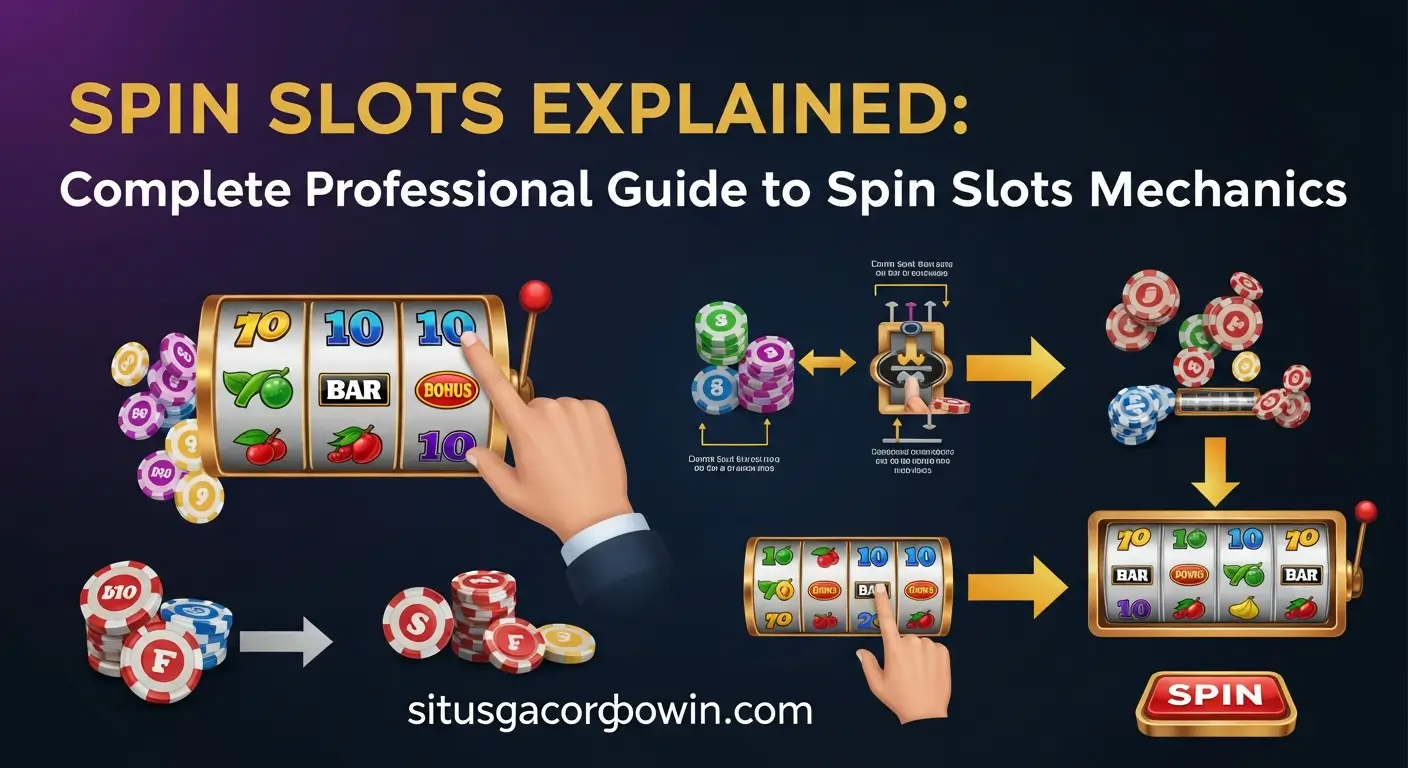
Welcome to situs gacor gbowin.com. Spin slots represent one of the most influential and widely recognized formats of digital slot gaming in the modern era. Over time, spin slots have transformed from simple reel-based concepts into complex digital systems that rely on advanced programming, probability models, and user-focused design. The phrase spin slots is used to describe slot games where outcomes are determined through reel spins powered by software rather than mechanical movement.
In the current digital entertainment environment, spin slots play a central role because they combine simplicity with engaging visual and interactive elements. Their popularity continues to grow due to their accessibility, structured randomness, and immersive presentation. This article provides a detailed explanation of spin slots, focusing exclusively on their mechanics, structure, behavior, and professional design principles.
Spin slots are carefully engineered digital systems where entertainment is driven by controlled randomness and structured design.
The Core Meaning and Definition of Spin Slots
Spin slots are digital slot games where players activate gameplay by initiating a spin of virtual reels. Each spin triggers a predefined system that generates an outcome based on mathematical probability rather than player skill or physical interaction. The term spin slots highlights the central action of spinning reels while also referring to the broader digital architecture supporting the game.
Unlike physical slot machines, spin slots do not rely on gears, springs, or mechanical movement. Instead, all actions occur within a software environment. This allows for greater flexibility in reel count, symbol variety, payout combinations, and visual effects. The digital nature of spin slots enables developers to design games that are scalable, adaptable, and consistent across platforms.
From a professional standpoint, spin slots should be understood as interactive digital products rather than simple games. Every element, from symbol placement to reel speed, is intentionally designed to support engagement and usability.
Read Also: daftar slot gbowin.login
The Digital Architecture Behind Spin Slots
Software-Driven Reel Systems
Spin slots operate through virtual reels that exist entirely within software. These reels are graphical representations controlled by backend logic. When a player initiates a spin, the system calculates an outcome before the reels visually stop. The spinning animation is a visual representation of that calculation rather than the cause of the result.
This architecture ensures that spin slots remain consistent regardless of device type or screen size. Whether accessed on a desktop computer or a mobile phone, the underlying system functions identically.
Random Number Generation Technology
At the heart of spin slots lies random number generation technology. This system produces unpredictable numerical sequences that determine reel positions for every spin. Each spin is independent, meaning previous spins do not influence future outcomes.
Random number generation ensures fairness and unpredictability. From a professional perspective, this technology is essential for maintaining trust and consistency within spin slots gameplay environments.
Every spin in spin slots is an independent event driven by mathematical randomness, not memory or patterns.
Structural Components That Define Spin Slots
Guide Spin slots are built using several core components that work together to create a complete gameplay experience. Understanding these components helps explain how spin slots function as structured digital systems.
Reels as Visual Outcome Displays
Reels are vertical columns that display symbols during a spin. In spin slots, reels are not physical objects but visual displays controlled by software. The number of reels can vary, influencing both complexity and presentation.
Reels serve as the primary method of showing outcomes. Their design, speed, and stopping sequence all contribute to the perception of engagement without altering the actual result.
Payline Configuration and Outcome Evaluation
Paylines are predefined paths across the reels that determine whether symbol combinations result in a recognized outcome. Spin slots may feature single or multiple paylines, depending on the design structure.
Paylines do not increase or decrease randomness. They simply define how outcomes are interpreted. From a professional design standpoint, payline structure influences clarity and usability rather than probability itself.
Symbol Design and Functional Purpose in Spin Slots
Symbols in spin slots serve both aesthetic and functional roles. Each symbol represents a data point within the game logic, tied to specific outcome values.
Designers carefully create symbols to ensure visibility, consistency, and thematic alignment. High contrast, clear shapes, and recognizable imagery improve user understanding. Functional clarity is essential, as confusion reduces engagement.
Symbols are weighted differently within the system. Some appear more frequently, while others are rarer. These weightings are part of the mathematical structure that governs spin slots’ behavior over time.
Symbol frequency in spin slots is determined by mathematical weighting, not visual appearance.
Mathematical Foundations That Control Spin Slots Behavior
Probability Models and Long-Term Balance
Spin slots are governed by probability models that define how often specific outcomes occur. These models ensure that results remain consistent over extended periods while appearing unpredictable in short sessions.
Probability does not guarantee specific outcomes within a limited number of spins. Instead, it governs behavior across large data sets. This is why spin slots results should always be evaluated over long-term performance rather than individual spins.
Return Structure and Outcome Distribution
The return structure of spin slots is calculated during development. This structure defines how outcomes are distributed across all possible spins. Developers use simulations to test and adjust these distributions until they achieve the desired balance.
From a professional viewpoint, this process ensures stability and predictability at scale while preserving randomness at the player level.
User Interaction Flow in Spin Slots
User interaction in spin slots is intentionally simple. The primary action involves initiating spins, adjusting values, and observing outcomes. This simplicity makes spin slots accessible to a wide audience.
The interface is designed to minimize friction. Buttons are clearly labeled, feedback is immediate, and transitions are smooth. These elements improve usability and reduce cognitive load.
Despite the simplicity, user interaction remains engaging due to visual motion, sound feedback, and anticipation created during each spin.
Simplicity in spin slots interaction enhances accessibility without reducing engagement.
Visual and Audio Design Principles in Spin Slots
Visual Consistency and Immersion
Visual design in spin slots focuses on consistency and clarity. Themes are cohesive, symbols are aligned, and animations are synchronized with outcomes. This consistency improves immersion and user satisfaction.
Animations are used strategically. They enhance presentation but do not affect outcomes. Professional design ensures that visual elements support understanding rather than distract from it.
Sound Design and Feedback Mechanisms
Audio elements reinforce actions within spin slots. Sounds confirm spins, reel stops, and outcomes. Effective sound design improves feedback without overwhelming the user.
Silence or poor audio design can reduce engagement. This is why professional spin slots prioritize balanced and responsive sound integration.
Psychological Engagement Created by Spin Slots
Spin slots are designed to maintain attention through anticipation and pacing. The delay between spin initiation and outcome reveal creates suspense. This anticipation is a core engagement mechanism.
While outcomes are random, the experience feels dynamic due to controlled timing, animations, and feedback. This design approach encourages continued interaction without altering probabilities.
Understanding this psychological structure helps explain why spin slots maintain long-term user interest.
Spin slots engagement is driven by experience design, not outcome predictability.
Common Misunderstandings About Spin Slots
Many misconceptions exist around spin slots behavior. One common misunderstanding is the belief that outcomes can be predicted through patterns. In reality, each spin is independent.
Another misconception is that certain times or sequences influence results. Spin slots do not store memory of past spins. Random number generation ensures complete independence.
Clarifying these misunderstandings is important for maintaining realistic expectations and informed engagement.
Professional Evaluation of Spin Slots Quality
High-quality spin slots demonstrate consistency, transparency, and usability. Outcomes align with displayed rules, interfaces are clear, and systems function reliably.
Poorly designed spin slots often suffer from unclear interfaces, inconsistent feedback, or confusing symbol behavior. These issues reduce trust and engagement.
Professional evaluation focuses on structure, clarity, and system integrity rather than visual appeal alone.
Long-Term Performance Behavior of Spin Slots
Spin slots are designed to perform consistently over extended usage. While short-term results vary widely, long-term data reflect the underlying probability structure.
This long-term consistency is achieved through extensive testing and simulation during development. Developers analyze millions of simulated spins to validate behavior.
Understanding long-term performance helps explain why short sessions do not accurately represent overall system behavior.
Spin slots reveal their true behavior only when viewed over long-term performance data.
Responsible Perspective on Spin Slots Interaction
Spin slots are structured as entertainment systems. They are not predictive tools or performance-based activities. Approaching them with this understanding supports responsible engagement.
Awareness of randomness, probability, and design intent allows users to interact with spin slots without unrealistic expectations. Education is the foundation of balanced usage.
Professional discussions around spin slots emphasize transparency and informed participation.
The Ongoing Evolution of Spin Slots Design
Spin slots continue to evolve through improvements in software performance, visual rendering, and interface responsiveness. These improvements enhance user experience without changing core mechanics.
Developers focus on optimization and clarity rather than altering randomness. This ensures continuity while allowing innovation in presentation.
The future of spin slots lies in refinement rather than reinvention.
Frequently Asked Questions About Spin Slots
What are spin slots?
Spin slots are digital slot games where outcomes are determined by spinning virtual reels powered by software. Each spin produces a random result based on programmed probability systems rather than player skill.
How do spin slots decide winning outcomes?
Spin slots use random number generation technology to determine reel positions for every spin. This ensures that each result is independent, unpredictable, and not influenced by previous spins.
Are spin slots based on skill or chance?
Spin slots are entirely chance-based. Player decisions, such as starting a spin, do not affect the outcome, which is controlled by mathematical probability models.
Do previous spins affect future results in spin slots?
No, previous spins have no impact on future outcomes. Every spin in spin slots is a separate event with no memory of past results.
Why do spin slots feel engaging despite randomness?
Spin slots use visual motion, sound feedback, and timing to create anticipation and immersion. These design elements enhance the experience without changing the random nature of outcomes.
Are all spin slots designed the same way?
While core mechanics are similar, spin slots vary in reel count, symbol design, payline structure, and visual presentation. These differences affect experience, not randomness.
What is the main purpose of spin slots?
The primary purpose of spin slots is entertainment. They are designed to provide engaging digital experiences through structured randomness and professional game design principles.
Conclusion
Spin slots represent a refined form of digital entertainment built on structured randomness, precise mathematics, and thoughtful design. Throughout this article, we explored how spin slots function, the role of software-driven reels, symbol behavior, probability models, and user experience elements that shape gameplay. Understanding these fundamentals helps clarify why outcomes remain independent and unpredictable while the experience feels engaging and controlled. Spin slots are designed for accessibility, consistency, and long-term balance rather than short-term predictability. When approached with clear knowledge and realistic expectations, spin slots offer a reliable and structured digital experience that reflects professional development standards and responsible interactive design.
