
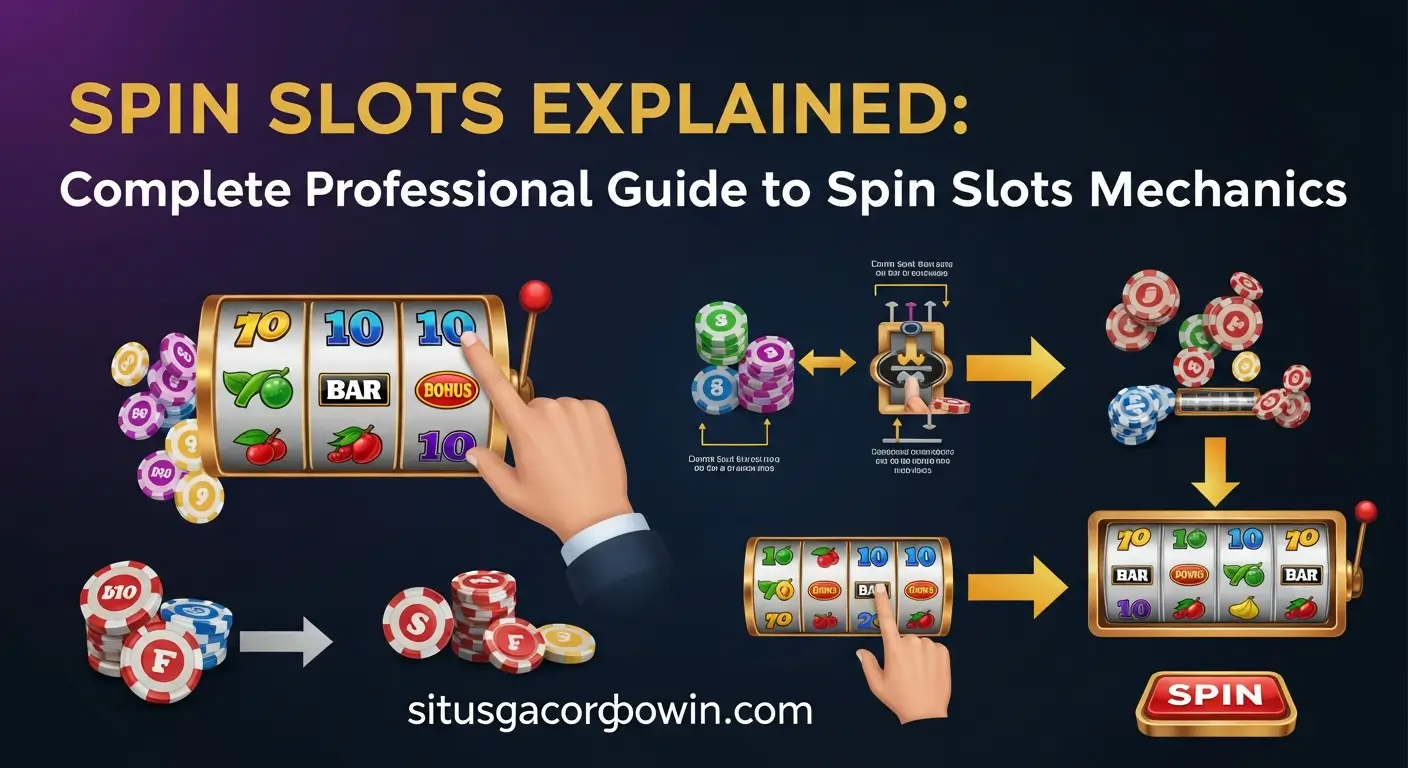
Welcome to gbowin.com. Spin slots are one of the most recognizable formats in modern digital slot gaming. What began as simple reel-based games has evolved into sophisticated digital systems powered by software, probability models, and user-focused design. The term spin slots generally describes slot games where results are determined through digitally generated reel spins rather than traditional mechanical reels.
Today, spin slots continue to attract attention through their simple gameplay, engaging visuals, interactive features, and structured randomness. Their evolution has been closely linked to advances in software technology, game mathematics, and interface design. This article explores the mechanics, structure, behavior, and professional design principles that shape modern spin slots.
The Core Meaning and Definition of Spin Slots
Spin slots are digital slot games where players start each round by spinning virtual reels. Each spin is controlled by a programmed system that generates an outcome based on mathematical probability rather than player skill or physical interaction. The term spin slots describes both the familiar reel-spinning action and the digital technology that manages the game’s results and features.
Unlike traditional physical slot machines, spin slots rely entirely on software instead of mechanical gears, springs, and physical reels. This digital format gives developers more freedom to create different reel structures, symbols, winning combinations, animations, and interactive elements. It also makes it easier to adapt games across smartphones, computers, and other platforms while maintaining consistent performance and functionality.
The Digital Architecture Behind Spin Slots
Software-Driven Reel Systems
Spin slots use virtual reels that are controlled entirely by software. These reels are graphical elements powered by backend programming and mathematical logic. When a player starts a spin, the system determines the outcome through its programmed process, while the spinning animation simply displays that result visually. In other words, the animation does not determine the outcome.
This software-based structure allows spin slots to operate consistently across different devices and screen sizes. Whether played on a desktop, tablet, or smartphone, the core mechanics and underlying logic remain the same. This makes it easier for developers to build scalable digital slot games while maintaining consistent performance across multiple platforms.
Random Number Generation Technology
At the core of spin slots is random number generation technology, which produces numerical values that help determine the symbols appearing on the virtual reels. When a spin begins, the system processes these values according to its programmed mathematical rules to produce an outcome. Each spin is designed to operate independently, meaning previous results do not directly influence the next one.
Random number generation plays a key role in maintaining unpredictability and consistency in spin slots. Past outcomes do not create patterns that control future results, as every spin is treated as a separate event. From a professional design perspective, this technology is a fundamental component of the architecture behind modern digital slot games.
Structural Components That Define Spin Slots
Spin slots consist of several essential components that work together to form a complete digital gameplay system. Each element serves a specific purpose, from controlling reel behavior and generating outcomes to displaying symbols and managing interactive features. Understanding these components offers a clearer picture of how spin slots function as organized, software-based systems.
Reels as Visual Outcome Displays
Reels are the vertical columns that display symbols during a spin. In spin slots, these reels are digital elements controlled entirely by software rather than physical mechanisms. The number, layout, and arrangement of reels can vary between games, giving developers flexibility in creating different visual structures.
Reels provide the main visual representation of each game outcome. Their animations, movement speed, and stopping sequence are programmed to create a smooth and engaging experience. However, the visual spinning itself does not determine the outcome; it simply presents the result generated by the underlying system.
Payline Configuration and Outcome Evaluation
Paylines are predefined paths across the reels that identify which symbol combinations can produce a recognized outcome. In spin slots, the number, layout, and arrangement of paylines can differ depending on the game’s design and structure.
Paylines do not directly affect the randomness of individual spins. Instead, they provide a framework for evaluating the symbols displayed on the reels. From a professional design perspective, a well-structured payline system improves clarity and usability while making it easier for players to understand how outcomes are determined.
Symbol Design and Functional Purpose in Spin Slots
Symbols in spin slots have both visual and functional roles. Each symbol is connected to the game’s underlying system and may represent a specific value, combination, or outcome. Their appearance is carefully designed to remain clear, consistent, and suitable for the game’s overall theme.
Effective symbol design emphasizes recognizable shapes, sufficient contrast, and simple visual presentation. Clear symbols make reel results easier to understand, while overly complex or confusing designs can reduce readability and overall usability.
Mathematical Foundations That Control Spin Slots Behavior
Probability Models and Long-Term Balance
Spin slots use probability models to determine the likelihood of different outcomes within their programmed mathematical structure. These models help maintain consistent behavior over a large number of spins, while individual results remain unpredictable.
Probability does not guarantee a specific outcome over a limited number of spins. Instead, it describes expected patterns across larger data sets and longer periods. Therefore, spin slots are best understood through their underlying probability structure rather than by trying to predict results from a small number of individual spins.
Return Structure and Outcome Distribution
The return structure of spin slots is established during the game’s development process. It defines how outcomes are mathematically distributed across a large number of possible spins. Developers use statistical models and simulations to evaluate these distributions and refine the system according to the intended design parameters.
From a professional perspective, this process helps maintain consistent mathematical behavior at scale while keeping individual results unpredictable. The underlying structure is designed to produce stable long-term patterns without making individual spins predictable.
User Interaction Flow in Spin Slots
User interaction in spin slots is designed to be straightforward, with the primary actions typically involving starting a spin, adjusting available settings, and viewing the resulting display. This simple interaction model makes the interface easy to understand across different user groups.
The interface focuses on reducing unnecessary complexity through clearly labeled controls, immediate visual feedback, and smooth transitions. These design choices improve usability and help users navigate the system with minimal cognitive effort.
Visual and Audio Design Principles in Spin Slots
Visual Consistency and Immersion
Visual design in spin slots focuses on consistency, clarity, and thematic coherence. Game themes, symbols, layouts, and animations are carefully coordinated to create a unified interface. Proper alignment and synchronized animations can improve immersion while making the overall experience easier to understand.
Animations mainly enhance presentation and provide visual feedback; they do not determine the underlying game outcomes. From a professional design perspective, visual elements should support usability and clear communication without creating unnecessary distractions or confusion.
Sound Design and Feedback Mechanisms
Audio elements in spin slots provide feedback for actions such as starting a spin, stopping the reels, and displaying outcomes. Well-designed sound effects complement the visual experience and help users recognize different interactions more naturally.
Effective audio design should be balanced, responsive, and unobtrusive. Excessive or poorly timed sounds can become distracting, while missing audio may reduce the overall impact of the interface. For this reason, professional spin slots use carefully synchronized sound effects to support clarity, feedback, and immersion.
Psychological Engagement Created by Spin Slots
Spin slots use carefully designed pacing to maintain attention and create anticipation. The short interval between starting a spin and revealing its outcome can add a sense of suspense, making timing an important part of the overall user experience.
Although outcomes are generated through random systems, the gameplay can remain dynamic through coordinated animations, transitions, sound effects, and visual feedback. These elements influence how the interaction feels without changing the underlying probability or outcome-generation process.
Common Misunderstandings About Spin Slots
Several misconceptions surround the behavior of spin slots, especially the belief that previous results can predict future outcomes. In properly designed digital systems, each spin is treated as an independent event, so earlier results do not determine the next outcome.
Another common misconception is that certain times, sequences, or patterns can influence results. Random number generation does not rely on previous spins or retain a history that controls future outcomes. Instead, each new result is produced according to the game’s programmed mathematical structure.
Professional Evaluation of Spin Slots Quality
High-quality spin slots are defined by consistency, transparency, usability, and reliable system performance. Game outcomes should align with the displayed rules, while the interface remains clear, responsive, and easy to navigate. Consistent feedback and straightforward controls also help create a more understandable digital experience.
Poorly designed spin slots may feature unclear interfaces, inconsistent feedback, or confusing symbol behavior. These issues can make the system difficult to understand and may reduce user confidence in the overall experience.
Long-Term Performance Behavior of Spin Slots
Spin slots are designed to maintain consistent mathematical behavior over extended periods, even though individual results may vary considerably in the short term. Across a large number of spins, aggregated results can provide a clearer representation of the probability structure built into the system.
This long-term consistency is supported by testing and simulation during development. Developers can analyze large volumes of simulated spins to assess whether the system operates within its intended mathematical parameters and performs as designed.
Responsible Perspective on Spin Slots Interaction
Spin slots are designed as digital entertainment systems rather than predictive tools or skill-based activities. Understanding this distinction helps set realistic expectations and provides a clearer view of how these games operate.
Knowledge of randomness, probability, and design principles can help users better understand spin slots and avoid common misconceptions about outcomes or predictability. A clear understanding of these elements also supports more informed and balanced engagement with digital slot games.
The Ongoing Evolution of Spin Slots Design
Spin slots continue to evolve through advances in software performance, visual rendering, interface responsiveness, and overall usability. These improvements can deliver smoother and more engaging experiences while preserving the fundamental mechanics of digital slot systems.
Developers increasingly emphasize optimization, accessibility, and interface clarity rather than altering the core principles of randomness and outcome generation. This approach maintains consistency while creating new opportunities for innovation in presentation, interaction, and cross-platform compatibility.
Frequently Asked Questions
What are spin slots?
Spin slots are digital slot games where outcomes are determined by spinning virtual reels powered by software. Each spin produces a random result based on programmed probability systems rather than player skill.
How do spin slots decide winning outcomes?
Spin slots use random number generation technology to determine reel positions for every spin. This ensures that each result is independent, unpredictable, and not influenced by previous spins.
Are spin slots based on skill or chance?
Spin slots are entirely chance-based. Player decisions, such as starting a spin, do not affect the outcome, which is controlled by mathematical probability models.
Do previous spins affect future results in spin slots?
No, previous spins have no impact on future outcomes. Every spin in spin slots is a separate event with no memory of past results.
Why do spin slots feel engaging despite randomness?
Spin slots use visual motion, sound feedback, and timing to create anticipation and immersion. These design elements enhance the experience without changing the random nature of outcomes.
Are all spin slots designed the same way?
While core mechanics are similar, spin slots vary in reel count, symbol design, payline structure, and visual presentation. These differences affect experience, not randomness.
What is the main purpose of spin slots?
The primary purpose of spin slots is entertainment. They are designed to provide engaging digital experiences through structured randomness and professional game design principles.
Conclusion
Spin slots represent a modern form of digital entertainment built around structured randomness, mathematical models, and thoughtful software design. This article explored how spin slots function, including software-controlled reels, symbol behavior, probability models, and user experience elements. These fundamentals explain how individual outcomes can remain independent and unpredictable while the overall experience remains smooth and engaging.
Ultimately, spin slots are designed around accessibility, consistency, and long-term mathematical behavior rather than short-term predictability. Understanding randomness, probability, and digital design helps establish realistic expectations about how these systems operate. The combination of software architecture, visual presentation, and structured interaction highlights the evolution of modern digital entertainment.
